
What Does OSHA Require for Farm Worker Restrooms?
Field sanitation rules under OSHA 1928.110 apply to agricultural operations with hand-labor employees, and they are specific: potable water, toilet facilities, and a handwashing setup, all within a quarter mile walk of wherever the crew is working that day. One facility per 20 employees is the baseline. That number does not shrink because the crew moves fields every few days, so growers around Merced usually plan for portable toilet rental units that can be relocated as harvest moves through different blocks. A standard porta potty rental covers most crews, and pairing it with a handwashing station rental satisfies the water and hygiene piece in one delivery. Some operations run larger crews during peak harvest and need a second or third unit to keep the ratio right; the how many porta potties do i need guide walks through the math by crew size. If your labor contractor works multiple ranches in a season, ask about placement rules first. The porta potty placement guide covers ground stability and access, both of which matter more on a dirt field access road than a paved lot. For crews doing pesticide or herbicide application, OSHA 1926.51(f)(1) requires washing facilities specifically because of the contaminant exposure, not general courtesy, so that job calls for a dedicated hand sanitizer station rental or portable sink rather than skipping it.
How Often Are Field Units Serviced During Harvest?
Weekly service is the standard interval under ANSI/PSAI Z4.3, built for up to 10 users over a 40 hour week, and Merced Porta Pros adjusts that schedule up during peak harvest when crew size climbs. A single standard unit holds a 60 to 70 gallon tank, which covers a small crew for a full week under normal use, but a labor camp running two shifts a day will need service more often to avoid a mid-week overflow. Farms near Franklin, about 5.4 miles northwest of Merced, and operations out toward Atwater, 8.9 miles northwest, both run on similar service intervals because crew sizes and hours track close together across the valley floor. Talk to us about your actual headcount before the season starts, not after the first unit fills. We also handle septic pumping service for farmhouses and packing sheds with their own tanks, and a typical residential-size system needs pumping every 3 to 5 years depending on tank size and household or crew use. If your operation runs a grease interceptor for a farm kitchen or processing area, that gets pumped once fats, oils, grease, and solids hit 25 percent of the liquid depth, not on a fixed calendar. Check how often to pump a septic tank for more on that timeline, and grease trap pumping if you run food service on site.
Where Should Units Go on a Working Farm?
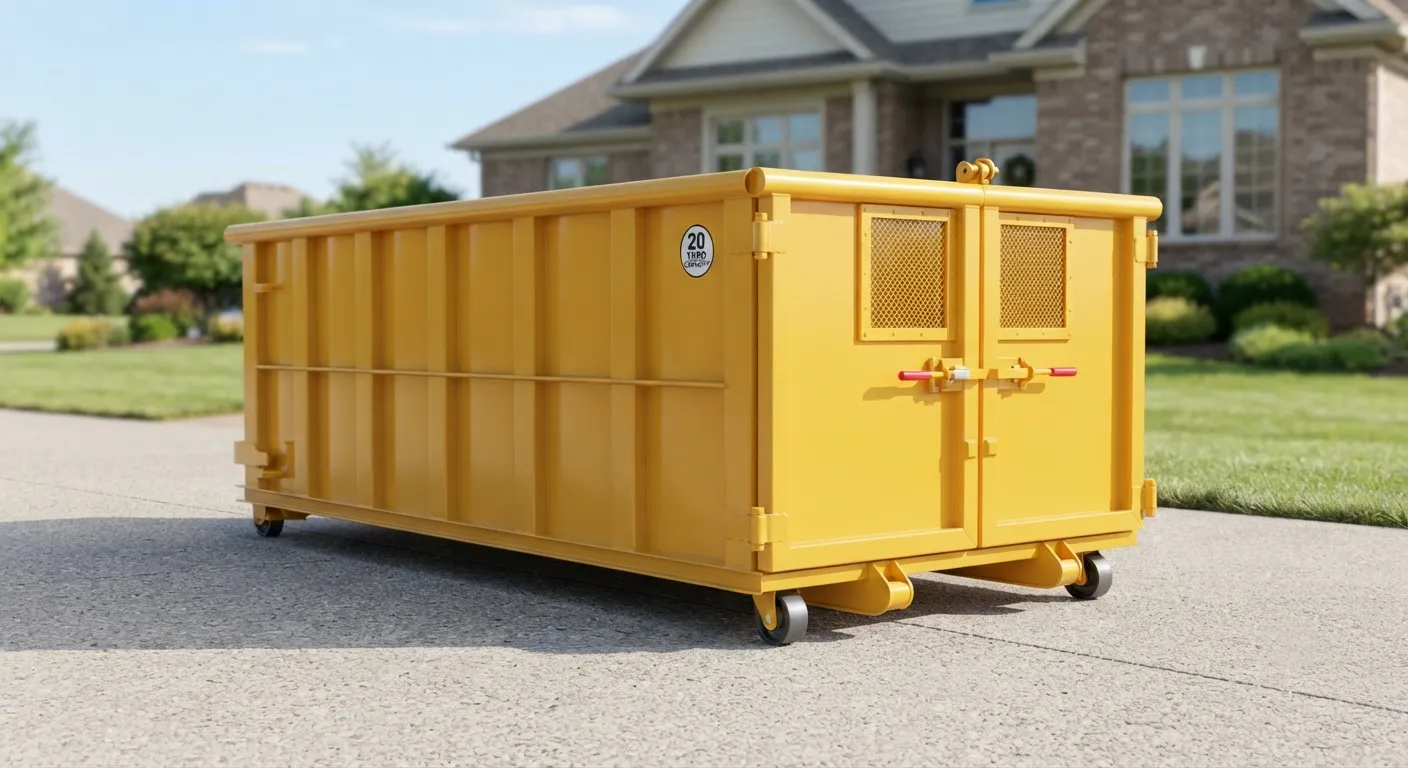
Placement on a working farm is different from a job site. Ground needs to hold a unit through irrigation runoff and truck traffic without sinking or tipping, and access matters just as much as location relative to the crew. A roll-off delivery truck needs about 60 feet of straight clearance behind it, which rules out tight rows between orchard blocks unless there is a turnaround nearby. That same clearance rule applies whether you are ordering a roll-off dumpster rental for packing waste or scheduling a portable toilet drop near a loading dock. Dairies and larger operations sometimes bring in a restroom trailer rental for permanent crew housing sites, since a trailer holds up better to daily heavy use than a single standard unit and does not need repositioning as often. If your farm is near Bear Creek, 4.2 miles east of Merced, or further out past Livingston at 16.1 miles northwest, delivery routes and drive time factor into how fast we can turn around an emergency swap if a unit gets damaged by equipment. For farms further south toward Chowchilla, 19.3 miles southeast, we still run the same weekly service schedule, just with routing planned around it. Also check ADA accessible porta potty options if your operation has crew members who need one; ADA Standards section 213.2 requires at least one accessible unit in any cluster of portable toilets, and never fewer than 5 percent of the total.
| unit | duration | typical price |
|---|---|---|
| standard | week | $200 |
| standard | month | $200 |
| ada | week | $185 |
Pricing runs by the week for most farm accounts since that matches the service interval; see monthly porta potty rental if your crew works a season-long contract instead. For the full cost breakdown by unit type, the porta potty rental cost page has the detail, and porta potty rental per day covers short jobs like a single harvest weekend.
Frequently asked questions
How many porta potties does a 20 person crew need?
One unit satisfies OSHA 1928.110 for a crew of 20 or fewer. Once you go above that, add units to keep pace, and space them so no worker walks more than a quarter mile. A construction site services style ratio table works for reference, but agricultural rules are set separately.
Do farm restrooms need to move with the crew?
Yes, generally. The quarter mile walk limit under OSHA 1928.110 means a unit sitting at the far edge of a large field does not count as compliant once the crew moves several rows over. Plan for relocation as part of your weekly service call.
Can Merced Porta Pros service remote farm sites?
Yes. We service farms throughout Merced County, including sites near Bear Creek, Franklin, and Atwater. Drive time factors into scheduling for the most remote parcels, so call ahead during peak harvest weeks.
What is the difference between a standard unit and a restroom trailer for farm use?
A standard unit is a single-stall toilet built for portability across fields. A 4 stall restroom trailer suits a fixed crew housing site with steady daily use and includes handwashing built in.
Do we need a handwashing station separate from the toilet?
Often yes, especially after pesticide or herbicide work, where OSHA 1926.51(f)(1) specifically requires washing facilities. A portable sink rental or handwashing station covers that requirement alongside your toilet units.
Next step
Get a delivery date
Tell us the address, the dates and the headcount. We size the order and confirm the route.